Fallout New Vegas
SPECIALs, Traits and Skills
To make the most of FONV, you will want to get the best setup of the SPECIALs, Traits, and Skills. The problem is figuring out how the elements of each of these 3 areas interconnect.
Here are which Skills each SPECIAL category affects, such as Str affects Melee. Additional effects are shown [in brackets]. Unfortunately, this is not the whole story. (Well, for one thing, this list doesn't address Traits, which are covered later.)
- STR: Melee [Additional effect: The amount you can carry; the weight of weapons which can be handled]
- PER: Explosive, Lockpick, Energy Weapons [The distance at which enemies show on radar]
- END: Survival, Unarmed [# of Hit Points, # of implants, poison/radiation resistance]
- CHR: Barter, Speech [Increases Companion armor and attack strength]
- INT: Science, Repair, Medical [Number of points when earning XP and when leveling up]
- AGL: Guns, Sneak [Number of AP you get for VATS; speed of drawing/loading weapons]
- LCK: Each point of LCK (Luck) adds 2 points at every other level.
all skills increase by 1 on odd Levels; e.g.: 5,6=13, 7,8=14. [Critical Chance]
The total number of base points for SPECIALs starts with 40.
The minimum number of points for a category is 1. The maximum is 10. Any points over 10 do not count.
From 0 to 2 Traits can be chosen which, among other things, can add points to SPECIALs.
These points affect the Skills belonging to each SPECIAL category
Each Skill shown gets +2 points for every point given to its SPECIAL category.
This applies to temporary points given to SPECIALs as well as base points.
For example, if a hat gives +1 to PER, then Explosive, Lockpick, and Energy Weapons each get +2,
but if you take off the hat, those skills have those 2 points taken away.
STR only increases one Skill, Melee, while LCK increases all Skills.
PER increases the 3 Skills shown above while END, CHR, and AGL each only increase the two skills shown.
This makes LCK look like the most important SPECIAL to which to give points, but INT determines not only points given you to distribute to Skills when leveling up, but also how much XP you get when you kill something, pick a lock, etc. The game does not make that clear.
At this date (2022), nobody online has a firm grip on exactly how much extra XP you get when doing those specific things. But the question is: if you didn't max out INT to get more XP, where would you put the SPECIAL points to make more of a difference?
Base points are those assigned directly to a SPECIAL by the player, either at the start of the game at Doc Mitchell’s or when leaving Goodsprings or by selecting the Intense Training perk or by buying Implants or in a DLC (much, much later in the game).
Other points can be added indirectly to SPECIALs by Traits selected at the start of the game, such as Early Bird and Good Natured and by wearing certain clothing such as a hat which adds 1 PER. But a major drawback to SPECIAL indirect points is that they do not count for additional effects (those shown in brackets above) except for STR's carry weight.
How much you can carry is determined by STR, and indirect points do affect this even though carry is not a Skill. This becomes obvious when the time turns to noon or 6 p.m. and you slow down because Early Bird's expiration has reduced STR enough so that you become overencumbered.
But only base points in INT determine the number of points given when you level up. Say that you assign 8 points to INT and that you use Early Bird which adds 2 points to INT between 6 a.m. and noon, bringing your INT up to 10 during that time. You will only get 14 LUP either way.
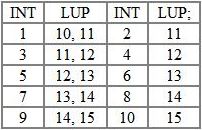 Here is how Level-Up Points are given: If INT is an odd number, level-ups on odd levels get 1 point less than level-ups on even levels, but if INT is an even number then every level-up always get the same number of LUP.
For example, if INT=8, then LUP is always 14. If INT=9, then LUP=14 on odd levels and 15 on even levels. If INT=10 then LUP is always 15. So to get 15 LUP on every level, INT must be 10.
Because starting INT=10 means you give up 6 points total in Science, Repair, and Medical and only get 1 point more when leveling up, it takes 6 level-ups to break even. But if you play to, say, 40 levels, you will come out 34 points ahead. But since you can reset points when leaving Goodsprings, you can set INT=8 to start and reset it to 10 when leaving.
However... whenever you earn XP, each point of INT gives you about a 2% bonus. It only takes 550 XP to reach level 3, but I'm usually at a minimum of 750 when I leave Goodsprings. For 700 XP, INT=10 will only give you 14 XP more than INT=9 and just 28 XP more than INT=8.
But with INT set to 8, 9, or 10, you should earn enough XP in GS to reach level 3, but at XP=10, you may reach level 4 faster than if INT were less than 10.
But if you initially set INT=8 instead of 10, you can add those 2 points saved to PER, increasing explosives and lockpick by 10 points each, both of which are pretty handy in GS.
Indirect points also do not count toward Perk requirements. For example, the Friends of the Night perk, requires a minimum PER of 6, but that is 6 base points. The Four-Eyes Trait starts by subtracting 1 from PER’s base points, then it adds 2 points when you wear glasses for a net gain of only 1. But that is not the whole story. (Note that PER affects Explosives, Lockpicking, and Energy Weapons skills.)
You can assign 6 points to PER and Four-Eyes raises PER to 7 by subtracting 1 base point and adding 2 indirect points, but if you try to select the Friends of the Night perk , you find out that you can’t get it because your PER only has 5 base points.
So if you want to get the Friends perk (which I don't think is worthwhile anyway), you either have to assign 7 points to PER or not use Four Eyes. If you are not getting a perk which requires 6 PER, then this is not an issue, but the same issue applies to other Perks and SPECIAL level requirements.
Assigning Base Points To SPECIALs:
Adding a point to Luck gives 1 additional point to every Skill, but only at odd levels of Luck. If you have a SPECIAL point left to allocate and Luck is already an odd number, you will not gain Skill points by adding 1 to it. Likewise, if Luck is an odd number, getting the Luck implant will not add anything to Skills. It increases critical chance a little, but it is still probably not your best use of implant investment.
However, if you plan to get a Luck Implant when you get the chance, you could reset Luck=6 when leaving Goodsprings so that the implant will take it to 7, an odd number, which would then give 1 point to every Skill.
That being said, a 1-point increase in each Skill is much more valuable at the start of the game when Skill points are low. By the time you get an implant, your Skill points may already be at a level where the 1-point increase will not matter much, so if you start with 6 instead of 5, you get virtually nothing for point #6 which could be put to better use elsewhere, and by the time you get the Luck Implant, the extra point may not be significant.
(Having said that, I should point out that following this site's walkthrough, you could be getting an implant at level 12 or before.)
So when assigning base points to Intelligence and Luck, favor a plan which gives these two categories odd numbers. For example, if you are down to Agility and Luck and have 1 point left to allocate and both categories currently have odd numbers (e.g.: both have 5), make Agility 6 and leave Luck at 5. It would be a waste to raise Luck from 5 to 6 because no additional points would be assigned to Skills as a result, but for every point added to AGL, it increases the Guns and Sneak skills by 2 and the number of Action Points by 3.
While on the subject of Sneak... Say that several SPECIALs, including Agility, are at 5. Then each of the Skills they affect are at 20 -- with one exception. Sneak is 23.
If each of these SPECIALs is increased by 5, such as by the Skilled trait, then each of their Skills will be 20 + 5*2 = 30, except for AGL. It affects Guns and Sneak. But while it will increase Guns to 30, Sneak will increase to 33. I've never found out how or why Sneak gets this bonus.
LCK affects every Skill, but not equally every level.
Goodsprings Versus The Rest Of the World:
At the start of the game in Goodsprings ("GS"), you allocate base points to SPECIALs and select Trait(s). During your time in GS, you also add points to Skills when you level up. When you have completed all the missions there, you can re-do all these allocations as you are leaving GS.
(While on the subject – Youtube videos show the player agonizing over selecting answers to the questions Doc Mitchell asks, but at the end, the Doc says that the answers don’t mean anything, so just keep pressing the button to get through ASAP. These same Youtubers also agonize over which SPECIAL points to select at the Vit-omatic for their character "for the rest of the game" when they should be trying to set SPECIAL points just for what's needed while in Goodsprings.)
There are some SPECIALs and Skills which are less important and some which are more important while in Goodsprings, so you should allocate beginning points to maximize needed skills and XP in GS and then change allocations when you leave GS to those which will do better in the rest of the world.
For example, STR and END are not very important in GS while INT is the most important (for getting more level-up points). Also important are CHR (increases Barter), AGL (improves Guns), and LCK (improves all Skills).
Take Strength for example. In GS, you are in a relatively confined area with two merchants (3 if you count Doc Mitchell) whose cash gets refreshed every few days. You do not need high STR to carry a lot of loot – just go to a merchant and sell it. (Note that stolen loot cannot be sold and is not worth carrying around to sell after you leave GS.)
STR also determines how heavy a weapon you can use effectively, but STR of 3 is plenty to handle weapons in GS. When leaving GS, I raise it to 5, then get a STR implant and a couple
of Intense Training perks to increase STR for handling heavier weapons later in the game.
Likewise, a non-melee player needs almost nothing in the way of Endurance skills (Survival and Unarmed) while in GS, nor are the other effects (number of Hit Points and # of implants, and poison/radiation resistance) of much value in GS, which is why I leave Endurance at 1 in GS. After leaving GS, I raise it to 3 in order to get more Hit Points, Implants and poison/radiation resistance.
So here is how I allocate SPECIALs at the start and when leaving GS:
| |
STR |
PER |
END |
CHR |
INT |
AGL |
LCK |
| Starting |
3 |
5 |
1 |
8 |
10 |
6 |
7 |
| +EB = |
5 |
7 |
3 |
8 |
10 |
8 |
9 |
| Leaving |
5 |
6 |
3 |
5 |
10 |
6 |
5 |
| +EB = |
7 |
8 |
5 |
7 |
10 |
8 |
7 |
Early Bird adds 2 to each of the base SPECIALs (except to INT when it is already at max of 10).
Again, you get no additional boost to skills if you make LCK 6 instead of 5 because LCK adds the same number of points to Skills whether LCK is 5 or 6 (or 7-or-8, etc.), so it is better to put that point where it will be used, such as in Agility.
Also, do not get the Luck implant later on if Luck is already an odd number such as 5. You can get the Intense Training perk and add a point to Luck to make it an even number and then get the Implant, but that is a lot to invest (4000 caps plus a Perk which you get only every-other level up) just to raise your Skills 1 point each.
If you are following the guide here, your Skill points will quickly get as high as you need them anyway.
The worksheet page shows how these SPECIALs affect Skills. You can see that Lockpick, Repair, Science, and Speech are all at 25 or higher because that is what is needed in Goodsprings. I never voluntarily put a single point into Energy (weapons), Melee, Survival or Unarmed because I am never doing anything that needs those.
Medicine is not needed at a higher level until much later in the game, and with Skill Magazines doubled by the Comprehension perk, you never really need Medicine above 45. Likewise, you can do any repairs you need for a very long time with Repair no higher than 30, helped by magazines.
Trait Combos:
Early Bird + Good Natured:
Good Natured adds 5 points to Speech, Medicine, Repair, Science, and Barter.
It deducts 5 from Explosives, Guns, Energy and Melee Weapons, and Unarmed.
Since I rarely if ever use Energy or Melee Weapons and Unarmed, GN is reducing 3 skills which I don't use and increasing 5 other skills which I use. That's a good trade-off.
For example, this allows me to reduce level-up points which I would otherwise add to the first 5 and add some of the net bonus to Explosives and Guns, leaving Energy. Melee and Unarmed low.
One downside of GN is that by adding points to medicine (along with those added by EB), it puts Medical to 32 and Doc's first speech check doesn't come if it is over 30. It has been suggested that drinking a beer would lower speech back down below 30. Doc has no beer, but I drank the bottle of scotch he had and Medical was still 32.
So using EB + GN sacrifices 20 XP for the first speech check. I recently tried EB + GN and found that it took a while longer to reach level 2 than it did with EB + Four Eyes.
Early Bird + Skilled:
Skilled adds 5 points to each of your Skills, but reduces XP earned by 10%. See Changing Specs after Goodsprings for a lengthy comparison of Skilled and Good Natured.
Early Bird + Four Eyes:
The only reason I ever used FE was because I thought I had to use a second trait and it seemed to have the least bad side effects, but as the chart below shows, it is not as valuable as the GN and Skilled.
| Traits |
Barter |
Energy |
Explos. |
Guns |
Lockpk |
Med |
Melee |
Repair |
Science |
Sneak |
Speech |
Unarmed |
Survival |
| None |
22 |
17 |
17 |
40 |
32 |
27 |
19 |
27 |
27 |
25 |
44 |
13 |
13 |
| EB-GN |
32 |
14 |
14 |
35 |
34 |
32 |
12 |
32 |
32 |
24 |
47 |
13 |
8 |
| EB-SK |
32 |
24 |
24 |
45 |
39 |
32 |
24 |
32 |
32 |
20 |
47 |
18 |
8 |
| EB-FE |
17 |
17 |
40 |
32 |
27 |
19 |
27 |
27 |
27 |
25 |
44 |
13 |
13 |
|